
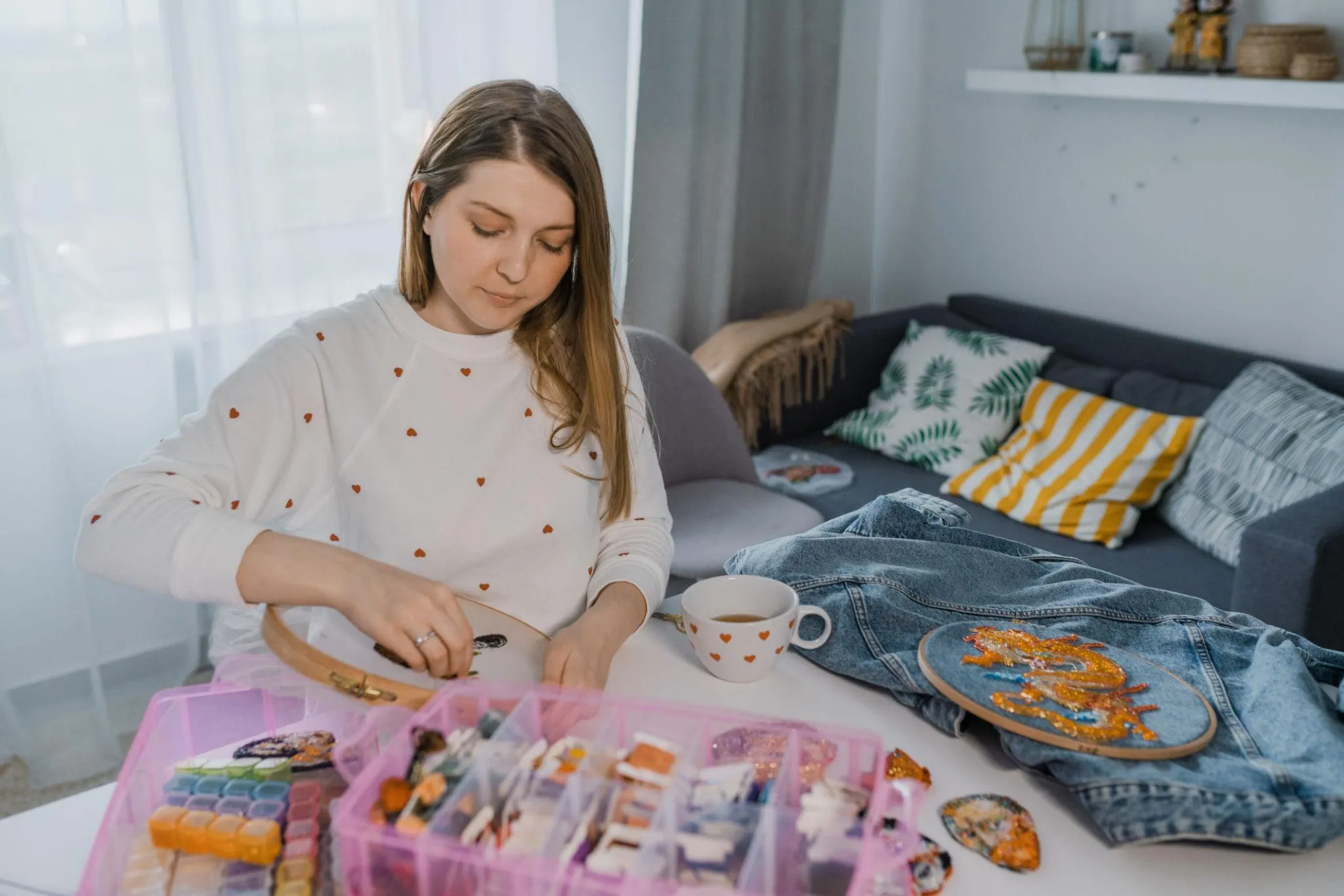
Embroidery is one of the most rewarding and relaxing hobbies you can learn. Whether you want to decorate clothing, personalize gifts, create beautiful wall art, or simply enjoy a creative pastime, embroidery is an accessible craft for people of all ages.
The best part? You don’t need years of experience or expensive equipment to get started. With a few basic tools, some patience, and the right guidance, you’ll be creating beautiful stitched designs in no time.
In this beginner’s guide, we’ll walk you through everything you need to know—from choosing your first embroidery kit to mastering the most essential stitches.
Why Embroidery Is Perfect for Beginners
Embroidery has experienced a huge revival in recent years. More people are turning to handmade crafts as a way to slow down, reduce stress, and create something meaningful with their own hands.
Here are just a few reasons why embroidery is an excellent hobby:
- Easy to learn with minimal supplies
- Affordable compared to many other crafts
- Helps improve focus and mindfulness
- Perfect for personalized gifts
- Endless creative possibilities
- Suitable for all ages
Unlike sewing or knitting, embroidery doesn’t require complicated patterns or machines. You can start with simple stitches and gradually build your skills over time.
What You’ll Need to Start Embroidery
Before making your first stitch, gather a few essential tools.
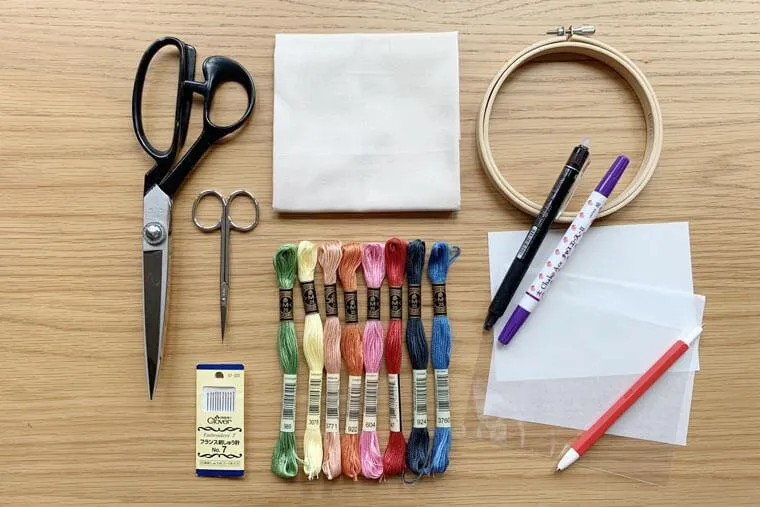
1. Embroidery Hoop
An embroidery hoop keeps your fabric stretched tightly, making stitching much easier and more accurate.
For beginners, a 6-inch wooden hoop is usually the best choice.
2. Embroidery Fabric
Not all fabrics work equally well.
Recommended fabrics include:
- Cotton
- Linen
- Canvas
- Cotton-linen blends
Choose light-colored fabric when you’re learning, as it’s easier to see your stitches.
3. Embroidery Needles
Embroidery needles have larger eyes than regular sewing needles, making them easier to thread with embroidery floss.
A beginner needle assortment is ideal because you’ll experiment with different thread thicknesses.
4. Embroidery Floss
Embroidery floss typically consists of six strands that can be separated depending on the effect you want.
Popular brands offer hundreds of beautiful colors, but beginners only need a basic color set to start.
5. Embroidery Scissors
Small, sharp scissors allow for precise trimming without damaging your fabric.
6. Water-Soluble Fabric Marker
Use a washable marker to transfer your design onto the fabric. The markings disappear easily after finishing your project.
7. Beginner Embroidery Kit
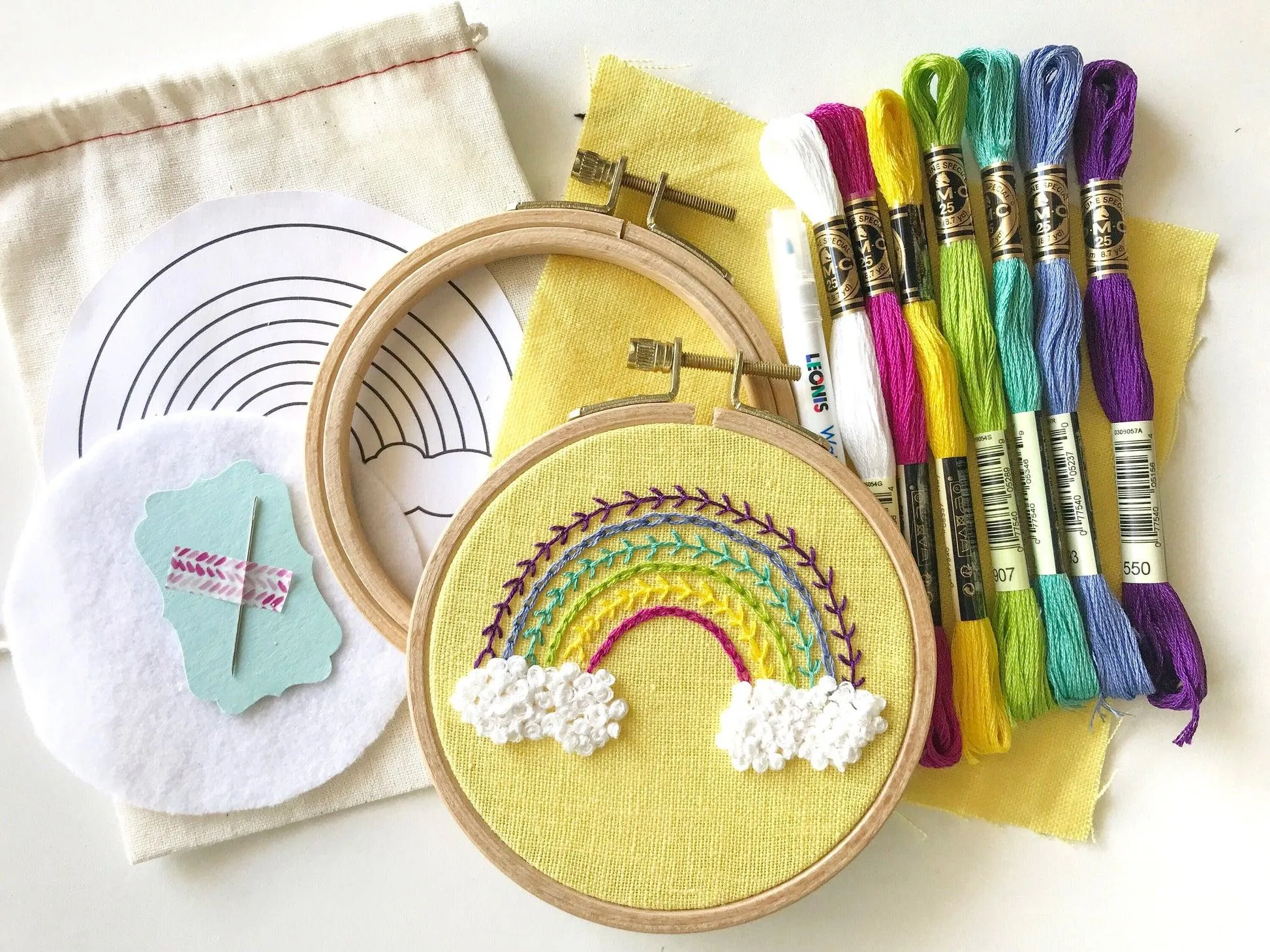
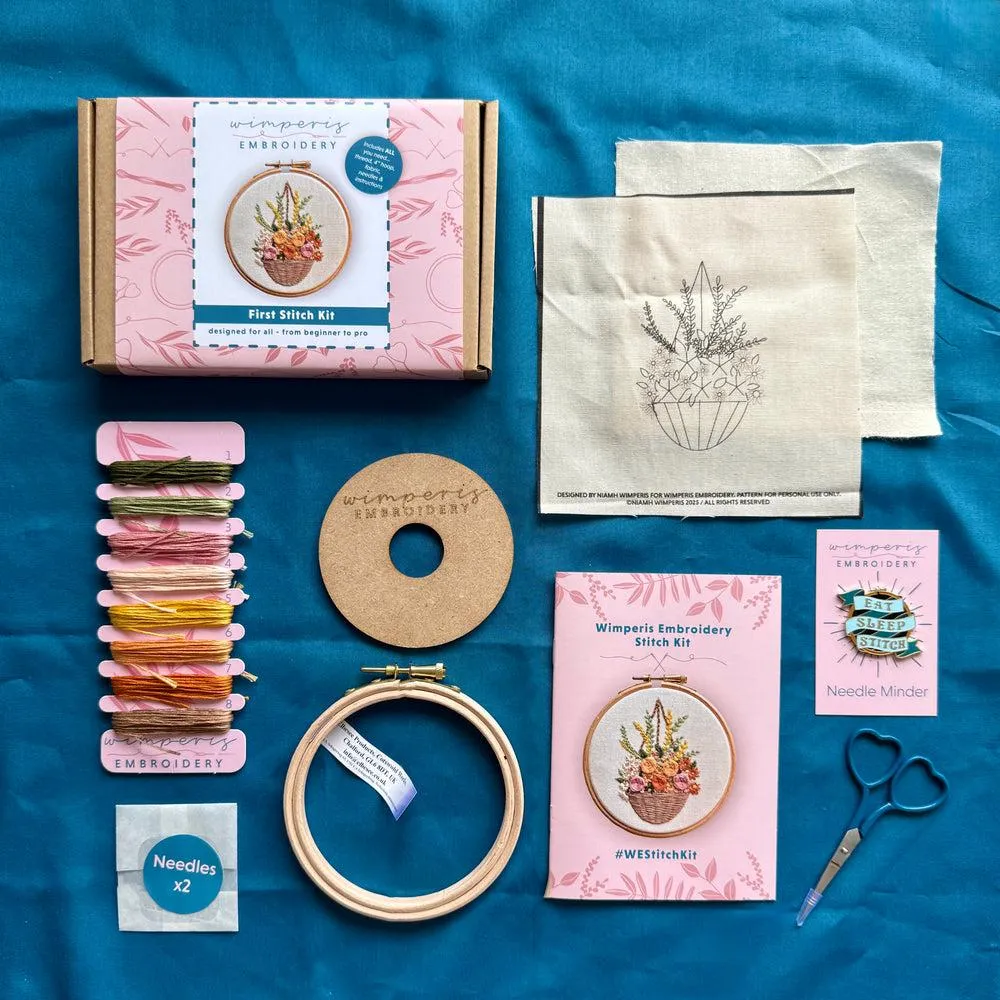
If you’re completely new to embroidery, purchasing a beginner embroidery kit is often the easiest option.
Most starter kits include:
- Pre-printed fabric
- Embroidery hoop
- Needles
- Colored floss
- Instructions
- Beginner-friendly patterns
A complete kit eliminates the guesswork and lets you start stitching immediately.
Learn These 6 Basic Embroidery Stitches First
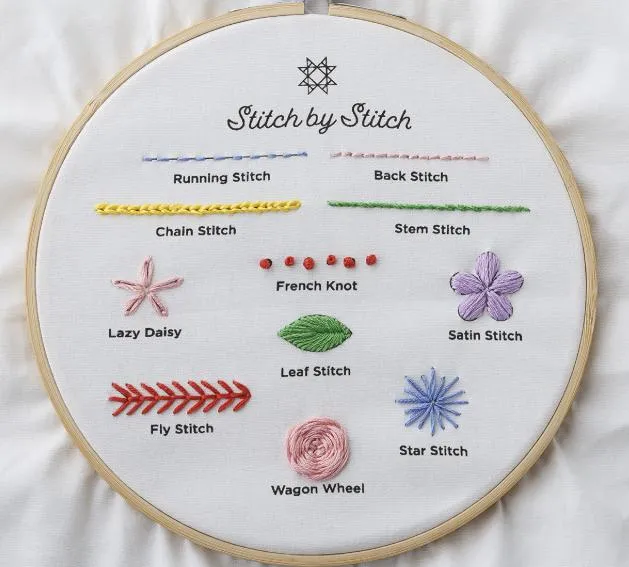
You don’t need to learn dozens of stitches at the beginning. Mastering a handful of foundational stitches will allow you to complete many simple projects.
1. Running Stitch
The running stitch is the simplest embroidery stitch and is perfect for outlines, borders, and practice.
Best for:
- Straight lines
- Borders
- Lettering
- Decorative accents
2. Back Stitch
Back stitch creates a stronger, continuous line than the running stitch.
It’s commonly used for:
- Outlines
- Text
- Detailed designs
3. Satin Stitch
The satin stitch fills solid shapes with smooth, closely packed stitches.
Perfect for:
- Leaves
- Petals
- Hearts
- Initials
4. Stem Stitch
This stitch creates elegant curved lines, making it ideal for flowers and vines.
5. French Knot
French knots add beautiful texture.
Use them for:
- Flower centers
- Small berries
- Decorative dots
6. Lazy Daisy Stitch
One of the easiest decorative stitches, perfect for creating flower petals.
Your First Embroidery Project
Many beginners wonder what they should make first.
Choose something simple that can be completed in just a few hours.
Great beginner projects include:
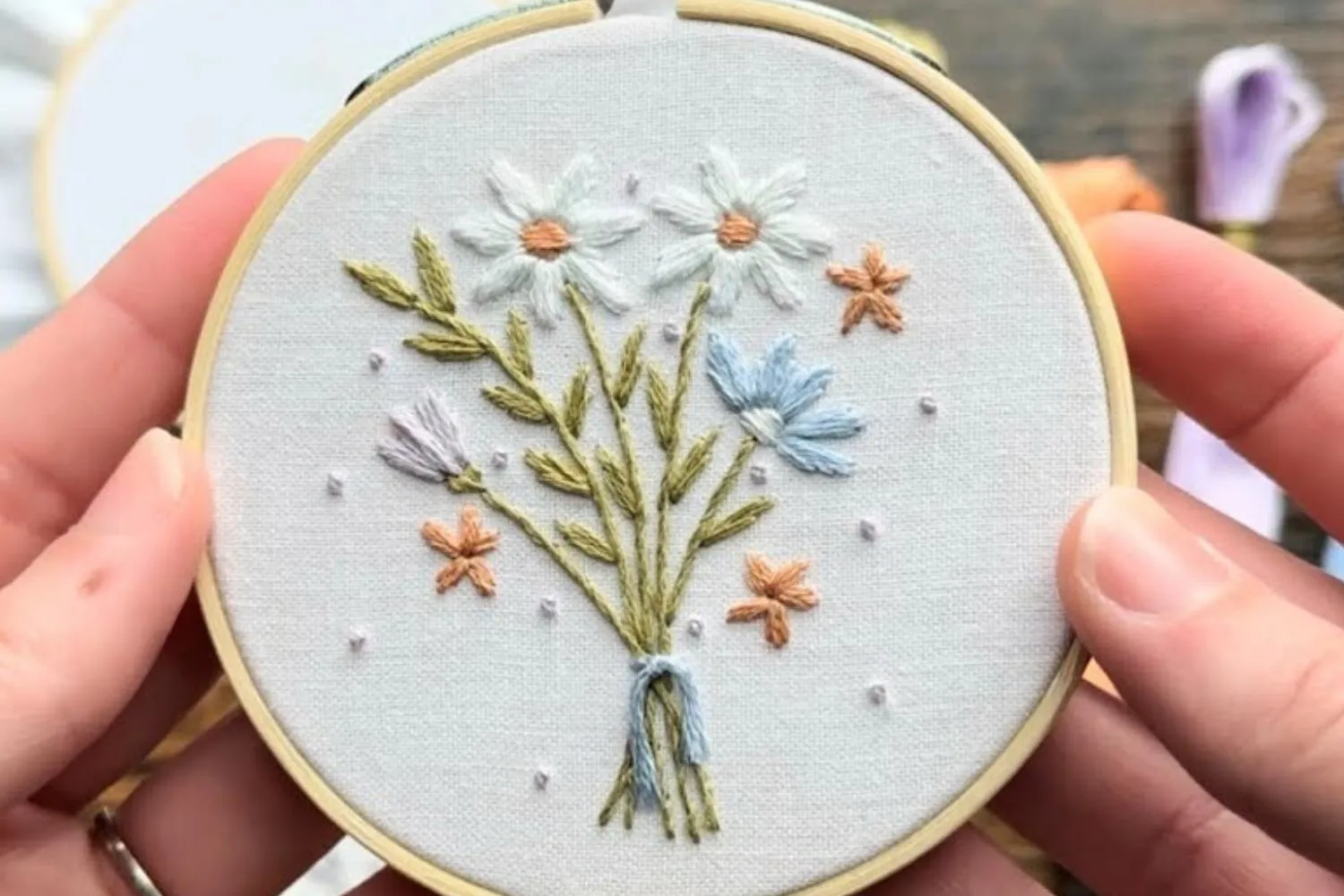
- Floral hoop art
- Monograms
- Simple leaf patterns
- Small wall decorations
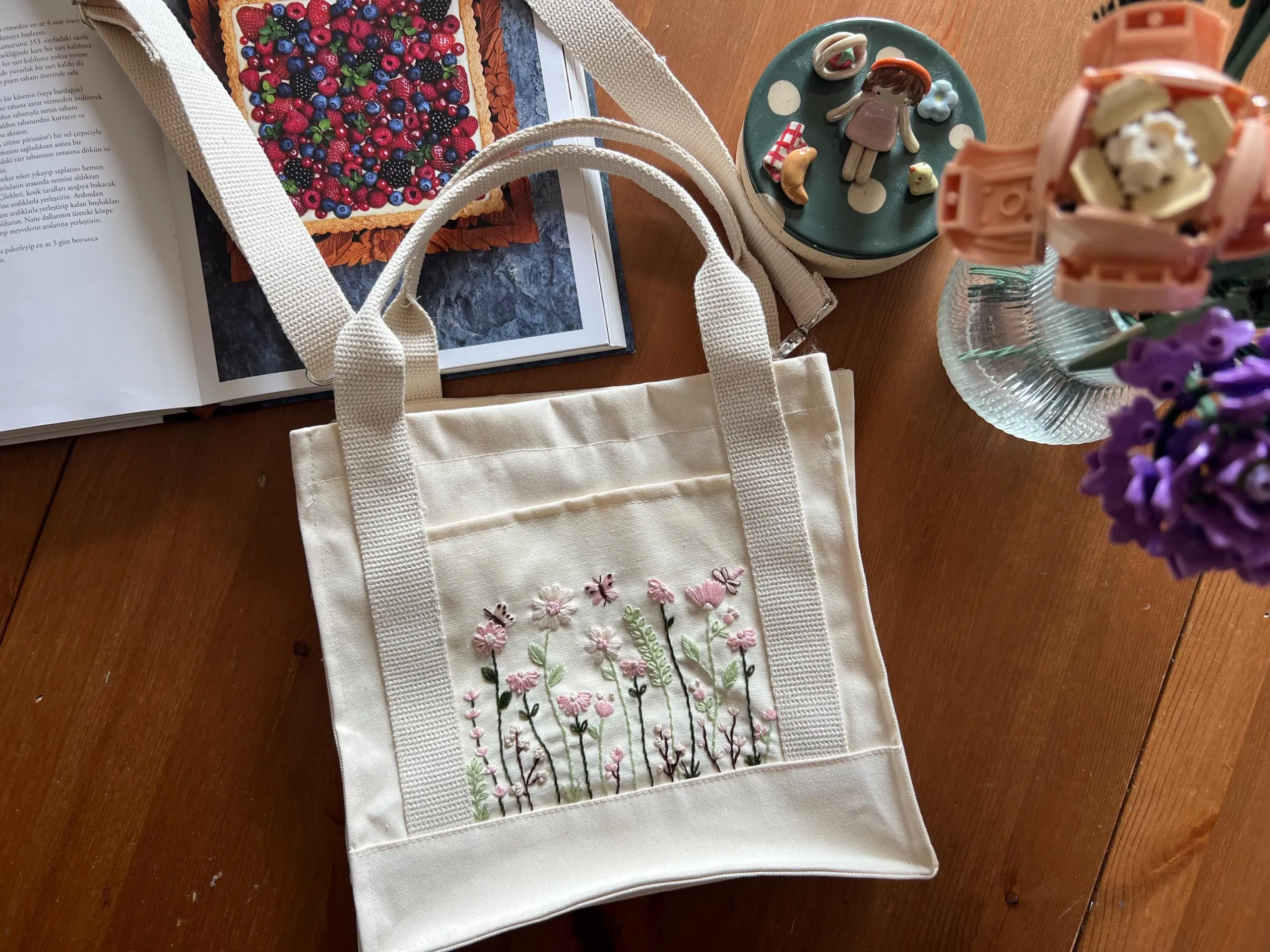
- Tote bag embroidery
- Bookmarks
Avoid large, detailed designs until you’ve gained confidence.
Common Beginner Mistakes to Avoid
Every embroiderer makes mistakes, but knowing them in advance can save you time and frustration.
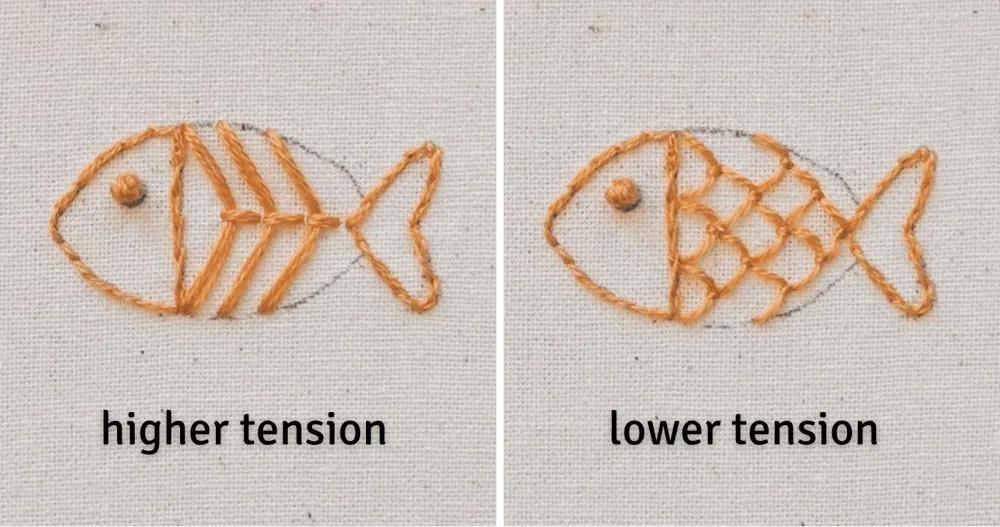
Pulling the Thread Too Tight
Overtightening causes fabric to wrinkle.
Aim for smooth, even tension.
Using Long Thread
Long strands tend to knot and fray.
A length of about 18 inches (45 cm) is much easier to manage.
Skipping the Hoop
Without an embroidery hoop, keeping your stitches even becomes much more difficult.
Starting with Complicated Patterns
Highly detailed designs can feel overwhelming.
Simple patterns help you build confidence and improve your technique more quickly.
Ignoring Practice
Before beginning your main project, practice each stitch several times on a scrap piece of fabric.
Even ten minutes of practice can make a noticeable difference.
Tips to Improve Faster
Learning embroidery is more enjoyable when you focus on steady progress instead of perfection.
Here are a few habits that will help you improve:
- Practice for 15–20 minutes each day.
- Complete small projects before moving to larger designs.
- Experiment with different stitch combinations.
- Keep your embroidery supplies organized.
- Don’t be afraid to make mistakes—every finished project teaches you something new.
Consistency matters far more than speed.
Choosing the Right Beginner Embroidery Kit
A high-quality starter kit can make learning much easier.
Look for a kit that includes:
- Easy-to-follow instructions
- Pre-printed patterns
- High-quality embroidery floss
- Durable wooden hoop
- Multiple embroidery needles
- Beginner-friendly floral or geometric designs
Many beginners find that a complete kit removes the uncertainty of buying supplies individually and allows them to focus on learning the craft.
Frequently Asked Questions
Is embroidery difficult to learn?
Not at all. Most beginners can learn the basic stitches within a single afternoon. Like any creative hobby, improvement comes with regular practice.
How long does it take to finish a beginner project?
Simple embroidery projects often take between two and six hours, depending on the design and your stitching speed.
What’s the best fabric for beginners?
Cotton is generally the easiest fabric to work with because it’s stable, affordable, and forgiving.
Do I need expensive supplies?
No. A basic embroidery kit includes everything needed to begin, making embroidery one of the most affordable creative hobbies.
Final Thoughts
Embroidery is more than just a craft—it’s a relaxing way to express creativity, make meaningful handmade gifts, and create pieces you’ll treasure for years.
The key is to start small, practice the fundamentals, and enjoy the process. Every stitch helps build your confidence, and before long, you’ll be ready to tackle more detailed patterns and personalized designs.
Whether you’re decorating your home, customizing a tote bag, or creating a thoughtful gift, embroidery offers endless opportunities to turn simple materials into something truly unique.
If you’re ready to begin your embroidery journey, explore our collection of beginner embroidery kits, premium embroidery tools, colorful thread sets, and DIY craft supplies. Each kit is carefully designed to help you learn with confidence and enjoy every stitch from your very first project.
About the author : ladybuys

Related posts
Popular products
-
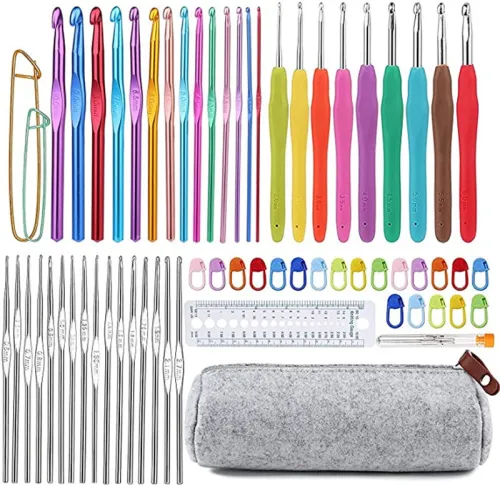 72-Piece Crochet Tool Set
Original price was: $29.90.$25.90Current price is: $25.90.
72-Piece Crochet Tool Set
Original price was: $29.90.$25.90Current price is: $25.90.
-
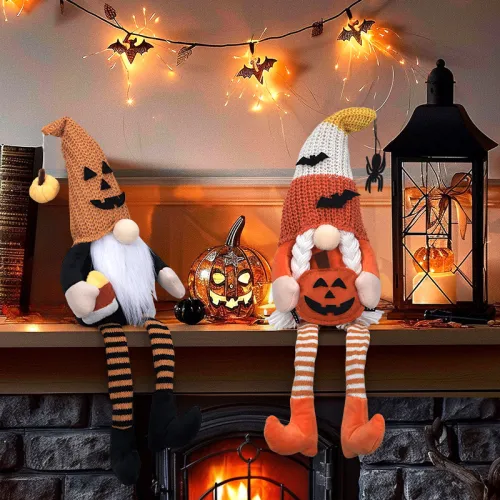 Halloween Long-Legged Faceless Doll
Original price was: $21.90.$11.90Current price is: $11.90.
Halloween Long-Legged Faceless Doll
Original price was: $21.90.$11.90Current price is: $11.90.
-
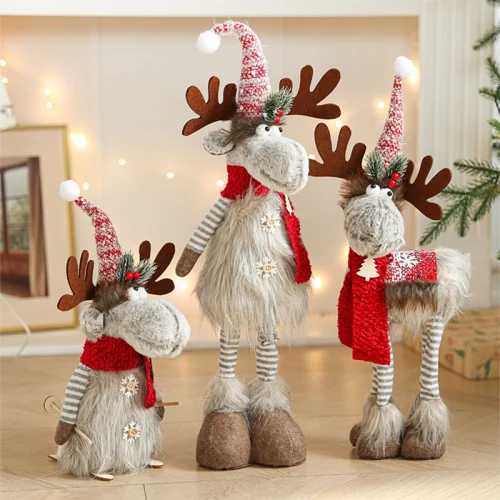 Cartoon Reindeer Christmas Ornament
Price range: $25.00 through $39.00
Cartoon Reindeer Christmas Ornament
Price range: $25.00 through $39.00
-
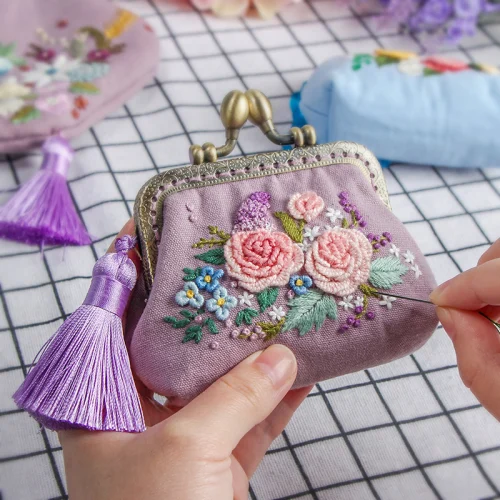 DIY Handmade Coin Purse Embroidery Kit
Original price was: $16.90.$9.90Current price is: $9.90.
DIY Handmade Coin Purse Embroidery Kit
Original price was: $16.90.$9.90Current price is: $9.90.
